Today, the Atyrau region stands on the threshold of large-scale transformation. The
economy’s heavy dependence on the oil and gas sector (around 88% of industrial output) makes
diversification and human capital development strategically critical.
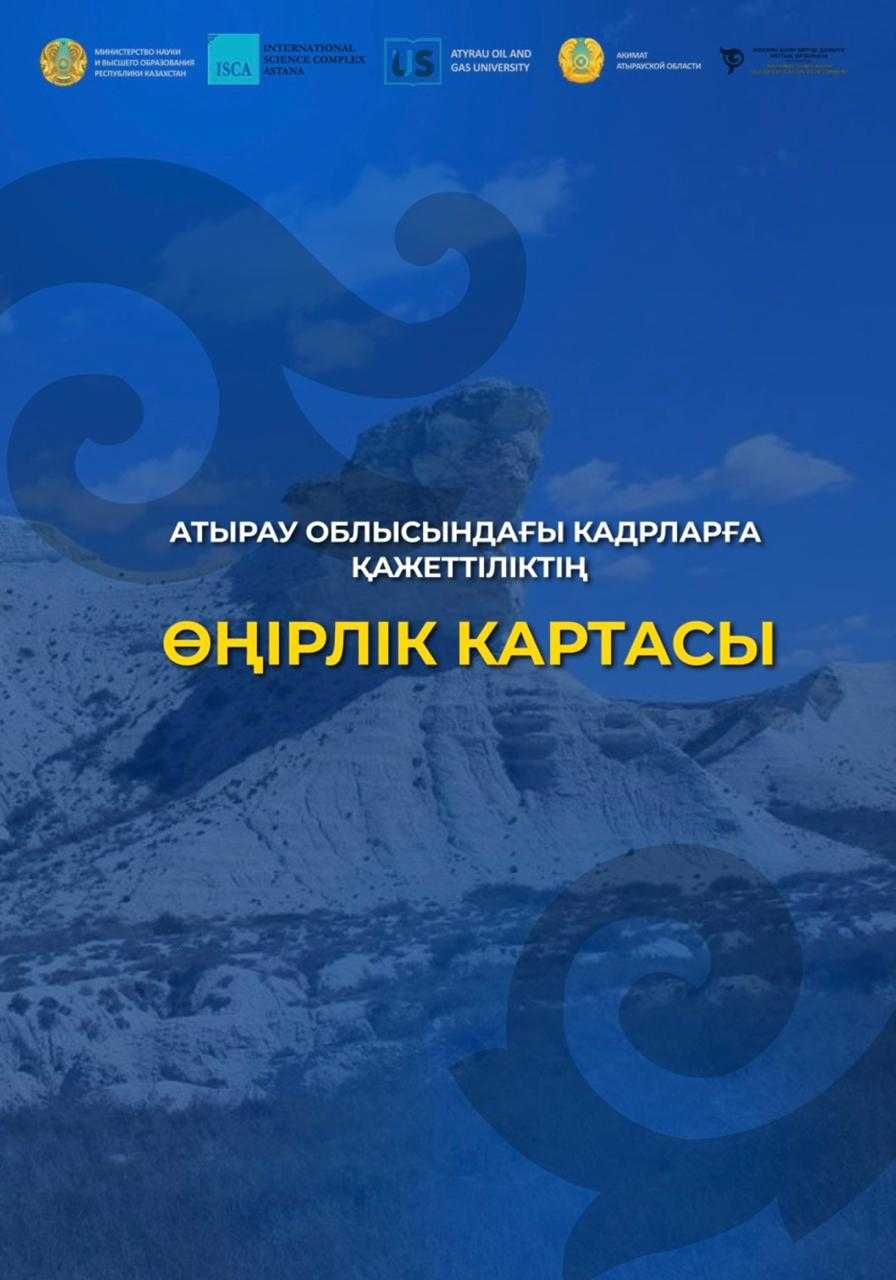
In response to this challenge, the International Research Complex “Astana” and Astana
International University developed the Regional Workforce Demand Map of the Atyrau Region
— a comprehensive study of the region’s future labor needs.
The Map is not merely a list of professions. It is a tool that connects the economy, the
labor market, and the education system, enabling government, business, and educational
institutions to speak a common language and providing a foundation for long-term workforce
planning.
As part of the project, the research team consisting of Kuanganov F.Sh., Smagulova Z.K.,
Sarina B.S., Nurzhanova G.I., Baltabayev B.Zh., Baybash G.K., and Lesbayeva G.K. conducted
a strategic analysis and examined the results of the partner institution — Safi Utebayev Atyrau
University of Oil and Gas (foresight sessions, sociological surveys, and professional diagnostics
of school students). The study involved 10,233 students from 101 schools across the region,
ensuring a representative picture of young people’s educational and career expectations.
The research shows that sustainable regional development is impossible without
transitioning from a resource-based model to manufacturing, the agro-industrial complex,
digitalization and the IT industry, tourism, and the food industry.
In tourism, new clusters are already emerging — from ecotourism and wellness
destinations to digital and VR solutions for the hospitality industry. In the agro-industrial sector,
key drivers include bioengineering, precision agriculture, water resource management, and agro-
IT.
The Map clearly distinguishes between professions: emerging professions (1–5 years) (AI
specialists, data analysts, VR/AR developers, agro-IT engineers, aquaponics specialists,
sustainability and environmental experts); transforming professions (traditional roles such as
agronomists, veterinarians, technologists, and guides are shifting toward working with digital
platforms, sensors, analytics, and automated systems); and declining professions (3–5 years),
where a number of specialties are gradually being displaced by automation, online platforms, and
AI — especially in routine operations and intermediary functions.
One of the key findings of the Workforce Demand Map is the gap between the labor
market and educational programs. This highlights the need to update educational standards,
expand dual and practice-oriented learning, and introduce micro-credentials and lifelong learning
programs.
The final conclusion of the Map is clear: human capital is becoming the foundation of the
region’s new economy. Investments in education, technology, and future skills are not social
expenditures but strategic investments in the sustainability and competitiveness of the Atyrau
region.
The Workforce Demand Map is a roadmap for the region’s development toward
2030–2050, where knowledge, adaptability, and the ability to change play a key role.
The presentation is available via the link below. https://drive.google.com/file/d/1ddhSj5hXTv6A64ac-RYDTYLKvIoQ4sr9/view?usp=drive_webb